Oil-Free Process Air for Pharmaceutical, Food and Electronics Plants
Oil-free compression is one layer of contamination control; the complete air system and point-of-use specification determine suitability.
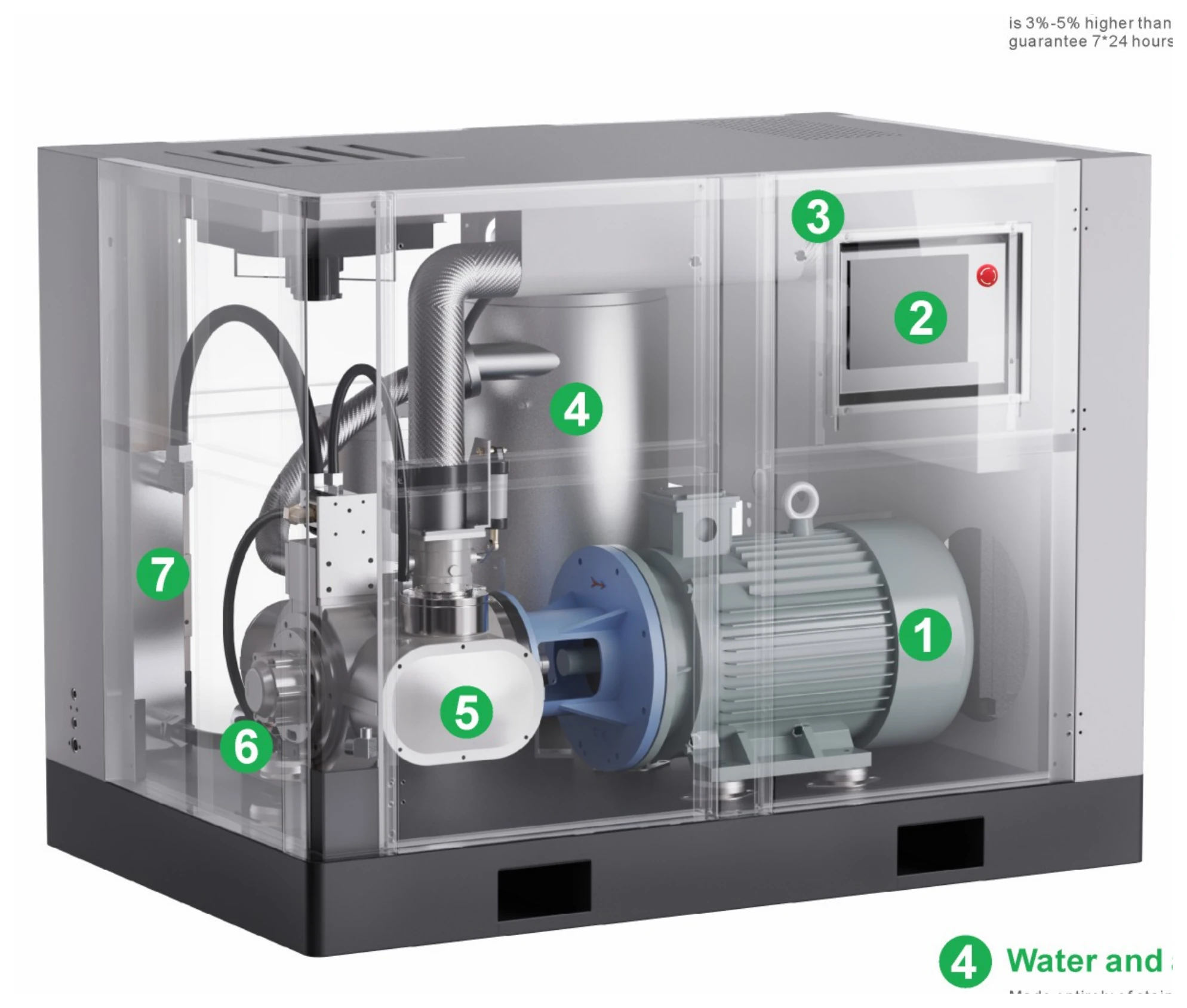
Define the contact risk
Classify whether compressed air directly contacts product, indirectly contacts packaging, operates actuators, enters a cleanroom or serves a general utility. The quality target and validation burden should follow the risk. Direct-contact food and pharmaceutical duties may require tighter particles, water, oil, odor and microbiological controls than non-contact automation.
Catalogue model selection begins with pressure and FAD, but the process specification must add dryer type, filtration stages, sterile filtration where required, materials, condensate management and monitoring. Do not claim “food grade” or “pharmaceutical grade” from compressor technology alone.
Control and verification
Define sampling locations at the compressor outlet and critical points of use. Record pressure, dew point, oil aerosol/vapor, particles and differential pressure as applicable. A risk-based monitoring plan should account for ambient contamination, maintenance intervention and seasonal humidity. Bypass lines and temporary hoses deserve the same contamination control as permanent piping.
For electronics, low dew point and stable pressure may be central. For beverage and packaging, taste/odor and product-contact risk matter. For pharmaceutical utility systems, change control, calibration and traceable maintenance documentation may be required.
Selection link
Use the product hub to compare fixed and variable-frequency tables. Submit the process contact classification, required ISO 8573-1 class notation, pressure at point of use and peak/average demand.